
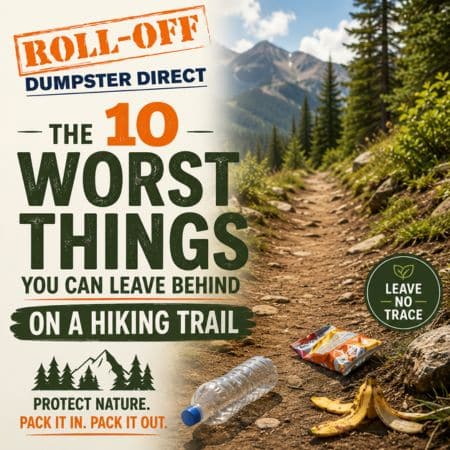
 There’s nothing better than spending a day outdoors, but every year, hiking trails across the country are littered with trash and debris that can damage the environment, harm wildlife, and ruin the experience for everyone else.
Whether you’re heading out for a quick afternoon hike or tackling a weekend adventure, one rule should always apply: Leave No Trace. That means packing out everything you bring in and sometimes even taking a little extra if you see someone else’s trash.
The Top 10 Worst Things You Can Leave Behind
1. Plastic Water Bottles
Single-use plastic bottles are one of the most common items found on hiking trails. They can take hundreds of years to break down and often end up in streams, rivers, or forests where wildlife may ingest them.
Instead:
- Carry a reusable water bottle or hydration pack.
- Refill before your hike.
2. Food Wrappers and Snack Bags
Granola bar wrappers, chip bags, candy wrappers, and other food packaging might seem harmless, but they don’t decompose naturally.
They also:
- Attract wildlife
- Teach animals to associate people with food
- Create dangerous situations for both hikers and animals
3. Banana Peels and Orange Peels
Many people believe fruit peels are biodegradable, so tossing them into the woods is okay.
Unfortunately, they’re not.
Depending on the climate, banana peels can take months or even years to decompose. They also introduce non-native food sources into natural ecosystems and encourage animals to gather near trails.
4. Dog Waste
If you hike with your dog, cleaning up after them is essential.
One of the biggest mistakes hikers make is bagging the waste and then leaving the bag beside the trail, planning to grab it later.
Too often, those bags never get picked up.
Dog waste contains bacteria and nutrients that can contaminate soil and waterways, while plastic waste bags add another layer of pollution.
5. Cigarette Butts
Many people don’t realize that cigarette filters are made of plastic fibers.
A single cigarette butt can:
- Take years to break down
- Leak toxic chemicals into the soil
- Start wildfires during dry conditions
Always extinguish cigarettes completely and pack them out.
6. Fishing Line
If your hike includes a lake or stream, discarded fishing line is one of the most dangerous forms of litter.
It can entangle:
- Birds
- Fish
- Deer
- Small mammals
Fishing line can remain in the environment for hundreds of years.
7. Wet Wipes
Even wipes labeled “flushable” or “biodegradable” don’t break down quickly outdoors.
Wet wipes often remain intact for years and become one of the most visible forms of litter on heavily used trails.
Stick with reusable cloths or pack out any disposable wipes.
8. Broken Camping Gear
Old tents, tarps, sleeping pads, folding chairs, or damaged coolers should never be abandoned in the backcountry.
Large items:
- Create visual pollution
- Harm wildlife
- Can be difficult and expensive for park staff or volunteers to remove
If something breaks, carry it back out.
9. Glass Bottles
Glass is especially dangerous because it can:
- Shatter and injure hikers or pets
- Harm wildlife
- Remain in nature indefinitely
In some dry climates, broken glass can even contribute to fire hazards by concentrating sunlight.
Choose reusable metal or plastic containers instead.
10. Human Trash from Group Gatherings
Popular hiking areas sometimes become gathering places for picnics, parties, or celebrations.
Unfortunately, that often leaves behind:
- Disposable plates
- Plastic utensils
- Beverage containers
- Decorations
- Balloons
- Paper products
Even small celebrations can generate a surprising amount of waste if everyone assumes someone else will clean it up.
Why Trail & Park Cleanup Matters
Every piece of litter affects more than just appearances.
Trash can:
- Injure wildlife
- Pollute water sources
- Increase wildfire risks
- Damage fragile ecosystems
- Reduce enjoyment for future visitors
Public lands depend on visitors doing their part to protect them. Even picking up one or two extra pieces of litter during your hike can make a meaningful difference. Outdoor recreation continues to grow, making responsible stewardship more important than ever.
What About Larger Cleanup Projects?
Community trail cleanups, park restoration events, campground renovations, and volunteer conservation projects often generate far more waste than standard trash bags can handle.
A roll-off dumpster rental provides a convenient, centralized place to collect:
- Brush and storm debris
- Broken fencing
- Old signage
- Construction materials
- Picnic shelter demolition debris
- Large volumes of litter and cleanup waste
Having a dumpster on-site keeps volunteers focused on the cleanup instead of making repeated trips to the landfill, making large outdoor projects safer and more efficient. Roll-off dumpsters are commonly used for cleanup projects, landscaping, and community improvement efforts because they simplify waste collection and disposal. Recently, we helped the following parks accomplish their cleanup goals:
- Trailblazer Park in Covington, GA
- Banning Park in Wilmington, DE
- Las Olas Oceanside Park in Fort Lauderdale, FL
- Jim R. Miller Park in Marietta, GA
We also had the honor of helping with the major renovation project at Hammond Park in Sandy Springs, GA in 2022.
Keep Nature Beautiful
The best hiking memories come from breathtaking views, not piles of trash. The next time you hit the trail, remember a simple rule:
Pack it in. Pack it out. Leave the trail better than you found it.
Whether you’re organizing a community cleanup, maintaining a park, or tackling a large outdoor restoration project, Rolloff Dumpster Direct can help you find the right dumpster rental to keep your cleanup organized and environmentally responsible.