
Every week, Chicagoans fill their black carts with more than 800,000 tons of garbage, expecting it to disappear. But where does it all go? The answer reveals a complex system with significant room for improvement.
The 4-1-1 on Trash in Chicago
Chicago produces approximately 900,000 tons of residential waste annually, primarily collected from single-family homes and buildings with four or fewer units. This waste is managed by the Department of Streets and Sanitation (DSS) using a grid-based collection system.
Landfills: The Primary Destination
A significant portion of Chicago’s waste ends up in landfills. In 2022, the city diverted only 9.6% of its waste from landfills, meaning over 90% was landfilled. This rate is notably lower than that of cities like New York and Boston, which have diversion rates of 20.2% and 25%.
Here are some major landfills that serve the Chicagoland area, where trash and construction debris from the region often end up:
- Will County Landfill (Laraway Recycling and Disposal Facility) – Located in Joliet, IL. One of the largest landfills handling municipal solid waste from the Chicagoland area.
- Prairie View Landfill – Located in Will County, this site also accepts a significant amount of the region’s waste.
- Indian Oaks Landfill – Located in Kankakee County, serving some of the southern Chicago suburbs and nearby counties.
- Pike County Landfill – Located further west, handling waste from parts of Illinois, including sections of the Chicagoland area.
- Winnebago Landfill – Near Rockford, IL, which may receive waste from the northwest suburbs, depending on hauler contracts.
- Milam Recycling and Disposal Facility – Located near Peoria, handling municipal solid waste from multiple Illinois regions.
While not all of these landfills are directly within the city limits of Chicago, the city’s waste is typically hauled to regional landfills due to space and environmental considerations.
Recycling Challenges
Chicago’s recycling program faces several obstacles:
- Low Diversion Rates. The city’s recycling rate has hovered around 9% for years.
- Contamination Issues. Improper items in recycling bins lead to entire loads being sent to landfills.
- Inconsistent Collection. Reports indicate that recycling and garbage are sometimes collected together, undermining recycling efforts.
Issues with Composting and Yard Waste
Composting in Chicago is limited. While yard waste collection is available, staffing shortages have led to yard waste being combined with regular trash, despite regulations against this practice.
Initiatives for Improvement
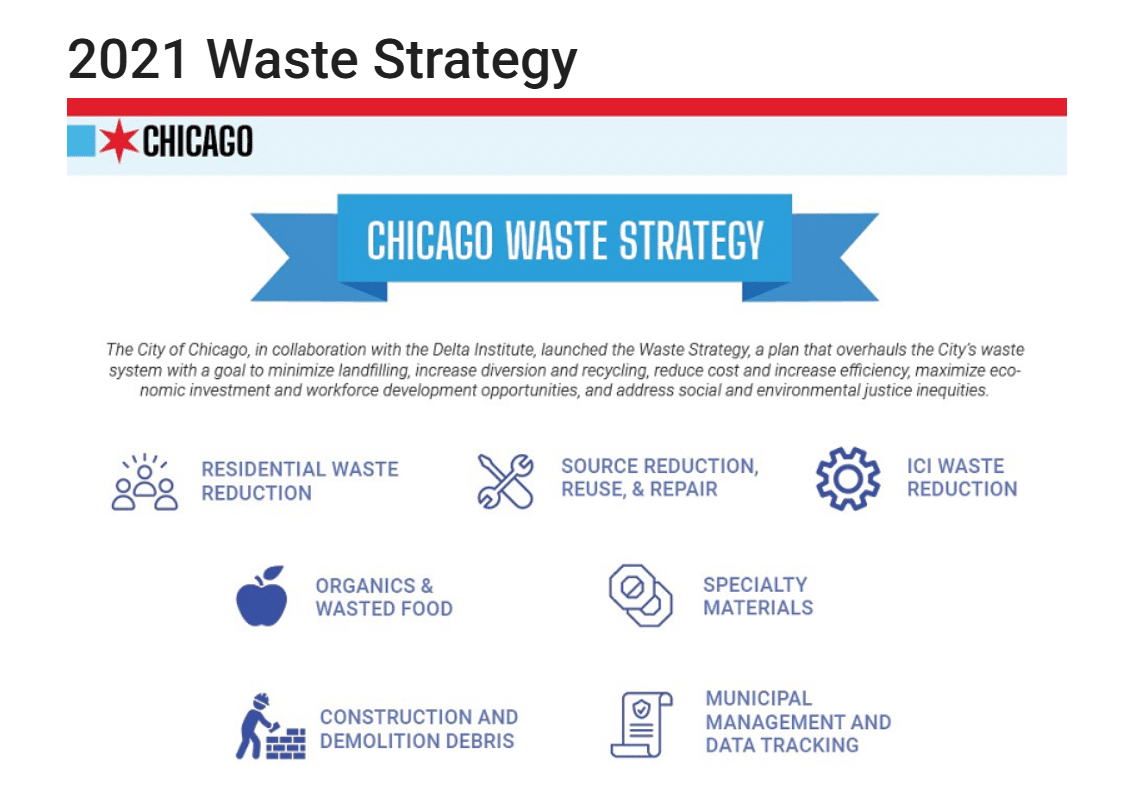
In response to these challenges, Chicago released a comprehensive Waste Strategy in 2021, aiming to:
- Increase Diversion Rates by implementing better recycling and composting programs.
- Reduce Landfilling through waste reduction and improved material management.
- Address Environmental Justice by ensuring equitable waste management across all communities.
The Future of Trash is Evolving
While Chicago faces significant challenges in waste management, ongoing initiatives aim to improve recycling rates, reduce landfill dependency, and promote sustainable practices. Residents can contribute by properly sorting recyclables, reducing waste, and staying informed about city programs.
Check out another of our recent blog posts to learn what happens to trash in the Washington, D.C. region.
Need to rent a dumpster in Chicago? Get a quote from Roll-Off Dumpster today.