
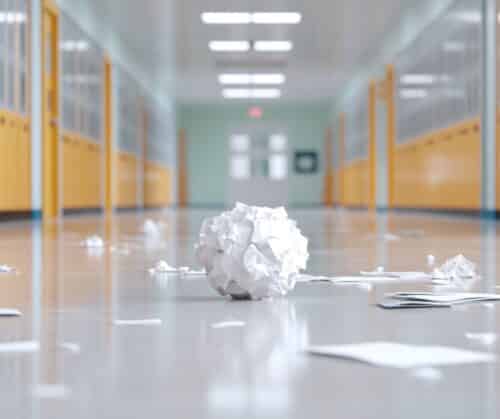
 As students gear up for another school year, Roll-Off Dumpster Direct is once again supporting schools with end-of-year clean-outs. We’ve partnered with hundreds of districts, including schools like Jt Reddick Elementary (GA), High Bridge Elementary (NJ), Sligo Middle (MD), and many others across the Southeast and Mid-Atlantic.
Why Proper Waste Management Matters
A 2025 World Wildlife Fund (WWF-supported) audit estimates that U.S. school cafeterias waste approximately 1.06 billion pounds of food annually. This contributes around 1.9 million tons of CO₂ emissions, wastes 20.9 billion gallons of water, and represents $1.7 billion in lost value. Notably, about 60% of this cafeteria waste, mainly fruit and unopened milk, is redistributable and could be diverted to families in need.
According to a detailed waste composition study, over 78% of school-generated waste in Minnesota alone could indeed be diverted from landfills through organic composting and recycling programs. Notably, 23.9% of that waste is food, and another 23.5% is recyclable paper.
Effective waste reduction not only provides a healthier learning environment but also saves schools money in collection costs and reinforces environmental stewardship among students.
Proven Ways Schools Can Reduce Waste
 Recycling & Composting Programs
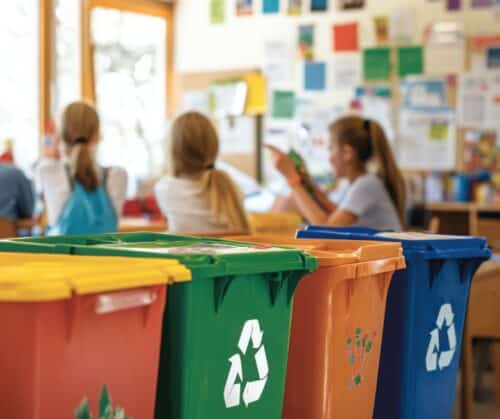 Recycling & Composting Programs
- Leverage resources like the EPA’s Model Recycling Program Toolkit to create robust recycling, composting, and reuse initiatives.
- New Haven Public Schools now run expanded recycling and composting programs in 17 schools, diverting over 33,000 pounds of food waste through a partnership with Blue Earth Compost and Farm2x.
Minimize Single-Use Items & Packaging
- Implement zero-waste events, eliminate single-use plastics, and push for reusable containers and steel utensils.
- Promote filtered water stations and supply swaps (e.g., backpacks, uniforms) to cut packaging waste at its source.
Environmental Education & Green Teams
- Encourage schools to form “green teams” or eco-clubs that conduct waste audits, lead campaigns, and oversee waste-reduction events.
Actenviro - Use the international Eco-Schools program, a seven-step framework empowering students in 67 countries, to instill sustainable habits.
Student-Led Sustainability Initiatives
- Midland Public Schools students launched a district-wide recycling campaign and scholarship funded by collected can deposits, bolstered by a $7,500 grant and a structured timeline.
- In Houston, fourth graders are actively petitioning to ban Styrofoam trays in cafeterias, proposing eco-friendly alternatives and gathering community support.
Track Progress & Celebrate Success
- Maintain awareness by incorporating social media, school newsletters, and posters to highlight recycling milestones and sustainable achievements.
- Pilot programs like Fisher Elementary’s “Green Packs” helped reduce trash by up to 70–86% in just two weeks through direct student involvement and tracking.
New & Emerging Strategies
Whole-School Climate Approach
- Adopt a whole-school model where sustainability values are integrated across curriculum, governance, and facilities—creating immersive, long-lasting behavior change.’
Interactive Tools & Gamification
- Use data dashboards and gamified platforms to engage students in monitoring food waste, such as the FoodWise system deployed in university settings.
Strategy Action Items
 Infrastructure. Recycle bins, composting systems, and reuse stations for utensils and containers
- Education & Engagement. Eco-clubs, green teams, curriculum integration, waste audits
- Student Power. Scholarship programs, campaigns, and youth-led policy advocacy
- Behavioral Tools. Awareness campaigns, gamification, progress tracking
- Institutional Embedment. Whole-school climate approach, international Eco-Schools alignment
 Infrastructure. Recycle bins, composting systems, and reuse stations for utensils and containers
What This Means for Your School
- Cost Savings: Efficient waste reduction can lower disposal expenses and repurpose materials for beneficial use.
- Educational Growth: Students gain leadership experience, scientific awareness, and a sense of community responsibility.
- Environmental Impact: Every pound recycled or composted keeps waste from landfills, reducing carbon emissions and pollution.
Ready to Take the Next Step?
- Browse the EPA’s recycling toolkit for tailored, actionable guidance.
- Reach out to local partners or programs like Eco-Schools for structured sustainability support.
- Share your success stories, whether it’s waste diversion data, student-led initiatives, or cost savings, and inspire other districts to follow your lead.
Together, we can make sustainability a celebrated tradition, not just a policy. Let’s help schools become greener, smarter, and stronger for students and communities alike.