
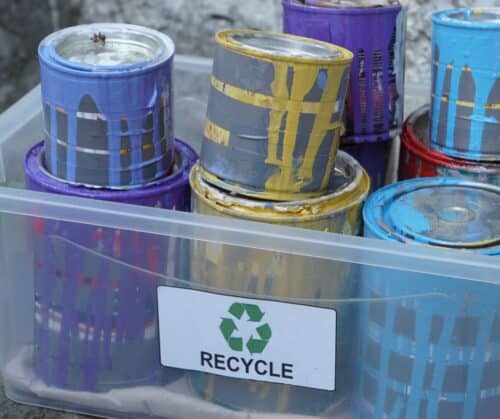
 Spring cleaning is the perfect opportunity to declutter your home, garage, basement, and shed. Along the way, many homeowners discover half-empty paint cans, old stains, solvents, and other household chemicals that have been sitting untouched for years.
One of the most common questions we hear is: “Can I throw paint in a dumpster?”
The answer depends on the type of paint and whether it has fully dried. Understanding the proper way to dispose of paint can help protect the environment, prevent safety hazards, and keep your spring-cleaning project running smoothly.
In this guide, we’ll cover everything you need to know about paint disposal, what can go in a dumpster, and other items that require special handling.
So, Can You Throw Paint in a Dumpster?
In many cases, fully dried latex paint can be disposed of with regular household waste, but liquid paint is typically prohibited.
Liquid paint can leak during transportation, contaminate other waste materials, and create environmental concerns. For this reason, most dumpster rental companies and landfills do not allow liquid paint inside dumpsters.
Before disposing of paint, always verify local regulations and disposal guidelines in your area.
Latex Paint vs. Oil-Based Paint
Not all paint is treated the same.
Latex Paint
Latex paint is water-based and is the most common paint used in residential homes.
If only a small amount remains in the can, you can often:
- Leave the lid off and allow it to dry naturally
- Mix in cat litter, sawdust, or a commercial paint hardener
- Dispose of the hardened paint according to local regulations
Oil-Based Paint
Oil-based paints, stains, varnishes, and solvents are generally considered household hazardous waste. These materials should never be poured down a drain, dumped on the ground, or placed in a dumpster unless specifically permitted by local regulations.
Instead, take them to a designated household hazardous waste collection facility.
How to Dry Out Paint for Disposal
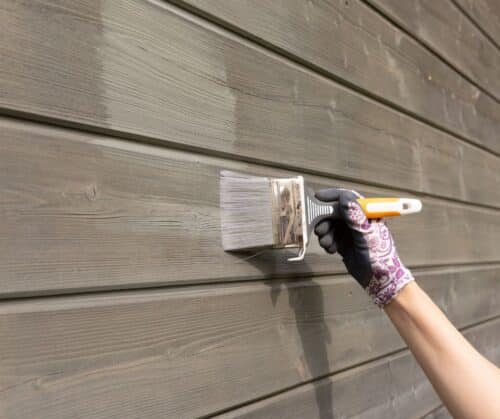 If you have leftover latex paint, drying it completely is often the simplest disposal method.
Follow these steps:
- Remove the lid.
- Add cat litter, sawdust, shredded paper, or paint hardener.
- Stir thoroughly.
- Allow the paint to fully harden.
- Confirm there is no remaining liquid before disposal.
Large quantities of paint may require several days to dry completely.
Other Spring Cleaning Items That May Require Special Disposal
While paint is one of the most commonly overlooked spring-cleaning items, it’s not the only material that may have disposal restrictions. Items such as household chemicals, batteries, electronics, fluorescent bulbs, and propane tanks often require special handling and should not be placed in a dumpster without checking local regulations.
If you’re unsure whether an item can be disposed of in a dumpster, contact your dumpster rental provider before loading it.
Spring Cleaning Disposal Tips
 Before you start filling a dumpster, check recycling databases like this one and follow the EPA’s guidelines on recycling/disposing of hazardous material
- Separate hazardous materials from regular waste.
- Donate usable items whenever possible. Places like Habitat for Humanity is a great option when it comes to leftover paint and other household items!
- Recycle cardboard, metal, and electronics.
- Break down bulky items to maximize dumpster space.
A little planning can save time, reduce disposal costs, and help ensure your cleanup project goes smoothly.
Make Spring Cleaning Easier
Spring cleaning often reveals more clutter than expected. Whether you’re clearing out a garage, tackling a basement cleanout, or preparing for a renovation, a dumpster rental can help simplify the process.
If you’re planning a cleanup project and aren’t sure what can be disposed of in a dumpster, our team is happy to help. Contact us today to find the right dumpster size and get answers to any disposal questions before your project begins.